Step-by-step course
15 Indoor Dog Enrichment Ideas for Winter (When You Can't Walk)
Rainy day. Cold morning. Sick dog. Here's exactly how to keep your dog's brain working without leaving the house.
5 chapters, 8 min read
Before you start
In short
- 15 minutes of mental enrichment tires a dog as much as a 1-hour walk — perfect for skipped winter walks
- Easiest wins: snuffle mats, lick mats, food puzzles, scent games, training sessions, frozen Kongs
- Bored dogs in winter become destructive dogs by spring — enrichment prevents behaviour problems before they start
Australian winters mean skipped walks. Cold mornings, school runs, late dark afternoons, and rain. Dogs that don't get their daily walk channel that energy into chewing, barking, digging, and door-stalking. The fix is not necessarily more walks — it's mental enrichment. A 15-minute brain workout exhausts most dogs more than a long walk. Here are the 15 enrichment ideas vet behaviourists and trainers actually recommend.
01
Free Ideas — Nothing to Buy
Use what you have at home
- 1
1. Scent box hunt
Hide treats inside a cardboard box stuffed with scrunched paper, old socks, or empty toilet rolls. Your dog has to dig, sniff, and root through to find the rewards. 10 minutes of pure scent work. Free, infinitely re-usable, scales with difficulty.
- 2
2. Muffin tin treat puzzle
Put a treat in each cup of a muffin tin. Cover each with a tennis ball. Your dog has to remove balls to access treats. Adjust difficulty by using fewer or more balls.
- 3
3. Trick training session
10 minutes teaching one new trick (spin, roll over, paw target). Mental focus + reward + bonding. Senior dogs love this as much as puppies — you can teach an old dog new tricks.
- 4
4. "Find it" game
Show your dog a treat, send them out of the room, hide it, then say "find it". Start easy (treat behind a chair), build to complex (treat in another room). Genuine scent work. The bedrock of nose work as a sport.
- 5
5. Towel roll-up
Scatter treats on a flat towel, then roll the towel into a sausage and lightly knot or twist. Your dog unrolls it to get treats. Great low-mess option.
Next chapter: Worth Buying — Enrichment Gear That Earns Its Keep
02
Worth Buying — Enrichment Gear That Earns Its Keep
Affiliate Disclosure: As an Amazon Associate I earn from qualifying purchases. Product links on this page go to Amazon AU. Prices shown are approximate, check Amazon for current pricing.

Calming
LickiMat Soother
Australian-invented rubber mat with grooves and ridges. Spread peanut butter, yoghurt, wet food, or pumpkin puree across the surface. Your dog licks it for 10–20 minutes. The repetitive licking is calming — used by vets for anxiety, post-surgery recovery, and grooming distraction.
- Australian-invented and designed
- 10–20 minutes per session
- Dishwasher safe
- Freeze for longer-lasting challenge
Classic
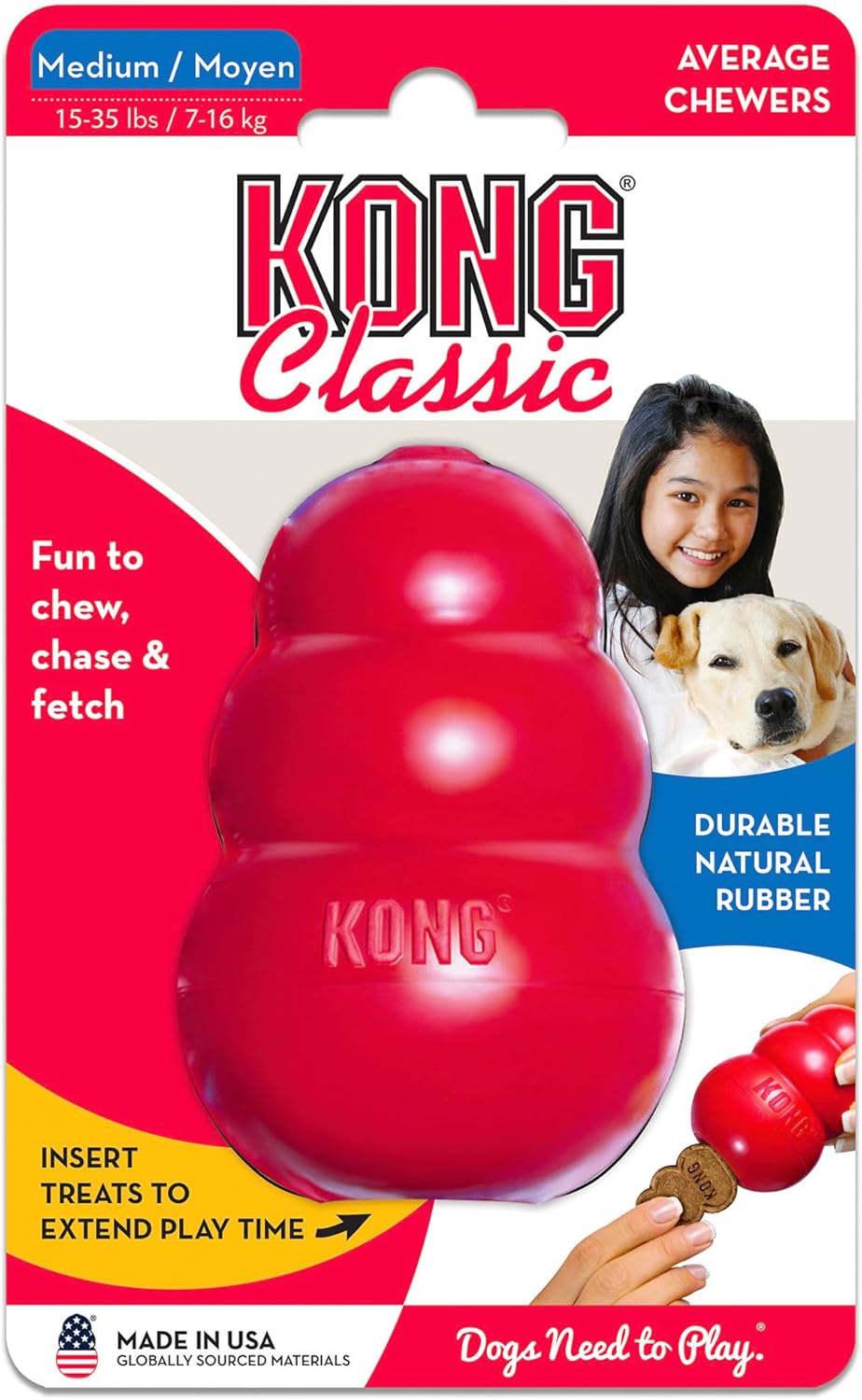
KONG Classic Rubber Toy
The gold-standard dog enrichment product. Stuff with peanut butter, kibble, yoghurt, or wet food. Freeze for an even longer challenge — frozen Kong can keep a determined dog occupied for 30–45 minutes. Indestructible rubber suitable for power chewers.
- Virtually indestructible natural rubber
- 30–45 minutes when frozen
- Multiple sizes XS–XL
- Dishwasher safe

Best for Sniffers
Snuffle Mat — Foraging Enrichment
Rubber base with hundreds of fleece strips. Hide kibble or treats in the fleece — your dog has to use their nose to forage. Mimics natural grass foraging behaviour. Tires dogs much faster than walking. Machine washable.
- Mimics grass foraging
- 10–15 minutes per session
- Machine washable
- Suitable for all dog sizes

Active Brain
KONG Wobbler Treat Dispenser
Weighted base toy that releases kibble as your dog noses it around. Replaces a meal with 15–20 minutes of moving, problem-solving, and rewarding. Great for high-energy breeds that need both physical and mental work.
- Slow-feeding meal replacement
- Encourages movement + problem-solving
- Adjustable difficulty
- Top-rack dishwasher safe

Advanced Puzzle
Outward Hound Nina Ottosson Puzzle Toy (Level 3)
Multi-step puzzle requiring your dog to slide, flip, and lift compartments to reveal treats. Level 3 is challenging enough for fast learners. Start with Level 1–2 for puzzle beginners. Excellent for high-intelligence breeds (Border Collies, Poodles).
- Multi-step problem solving
- Levels 1–4 available
- Best for intelligent breeds
- 15–25 minutes per session
03
Training Games — Tire Their Brain
Five trainer-approved indoor games
- 1
6. Three-cup shell game
Place treat under one of three cups while dog watches. Shuffle the cups. Dog must point to the right one. Start with no shuffling, build difficulty. Pure mental work.
- 2
7. "Which hand?" game
Put a treat in one closed fist. Hold both hands forward. Dog must nose or paw the correct hand. Simple, infinitely repeatable, great for shaping focus.
- 3
8. "Touch" target training
Teach your dog to touch your hand with their nose on cue. Then expand — touch this object, touch a target stick, run between two targets. Foundation of advanced trick training.
- 4
9. Indoor recall practice
Two people, opposite ends of the hallway. Take turns calling the dog. Reward enthusiastically. Builds recall under low distraction — essential foundation skill.
- 5
10. "Place" / stay practice
Teach your dog to settle on a specific mat or bed. Build duration in 1-minute increments. A reliable "place" cue solves dinner-time stalking, doorbell chaos, and visitor anxiety.
04
Body + Brain Combo (Indoor Physical Work)
When weather stops outdoor walks entirely
- 1
11. Indoor stair laps
Toss a treat up the stairs. Dog runs up, eats, then called back down. Repeat 10–15 times. Cardio + recall + impulse control. Only for healthy young dogs — never for arthritic or large-breed puppies.
- 2
12. Tunnel + chair obstacle course
Drape sheets over chairs to make tunnels. Add cushions to weave around. Lure dog through with treats. Indoor agility for $0.
- 3
13. Indoor tug
Structured tug game with rules — they take the toy on cue, drop it on cue. Massive physical and mental workout. Avoid for dogs with cervical/spine issues.
- 4
14. Find the toy
Hide their favourite toy in a hard-to-reach spot. Send them to find it. Combines scent work + problem solving + physical movement.
- 5
15. Evening "wind-down" sniff walk in your backyard
Even 10 minutes of free sniffing in your own backyard is mentally enriching. Don't direct the dog — let them choose where to sniff and how long. Sniffing lowers stress hormones in dogs.
05
How to Keep Enrichment Working
- ✅ Increase difficulty as they learn
- A puzzle that takes 30 seconds tomorrow won't challenge them. Add steps, add layers, add new objects
- ✅ Use part of daily food allowance
- Replace 30–50% of kibble with enrichment delivery. Saves on treats and gives meaning to mealtimes
- ✅ Mix calm and active enrichment
- Lick mat (calming) + puzzle (focused) + tug (active) = balanced day. Don't over-stimulate
- ✅ End on success
- Always end the session on something easy your dog can win. Don't push frustration — quit while they're winning
Winter enrichment routine — 15 minutes a day
- 5-minute morning lick mat (during your coffee)
- 5-minute lunchtime puzzle or scent game
- 5-minute evening trick training before bed
- Rotate toys weekly to maintain novelty
- Use 30% of daily food via enrichment, not bowl
- End every session with an easy win and verbal praise
- Replace skipped walks with double enrichment, not double meals
End of the course
Common questions
Can mental enrichment really replace a walk?
For one day, yes. Mental work tires dogs 4× faster than physical work. A 15-minute puzzle session genuinely equals a 60-minute walk in terms of fatigue. But long-term, dogs still need outdoor exercise for muscle, joint, and social development. Enrichment fills gaps — it doesn't replace walking entirely.
My dog finishes puzzles in 30 seconds — what now?
Increase difficulty. Stuff the Kong more tightly, freeze it, use larger treats requiring more effort. Move from Level 1 to Level 3 puzzles. Use snuffle mats with longer fleece. The goal is a 10–20 minute challenge — adjust until you hit that window.
My puppy chews everything in winter — is enrichment the fix?
Probably. Destructive chewing in puppies is almost always under-stimulation or teething. Add 2–3 enrichment sessions per day, provide frozen Kongs and lick mats, and ensure they have appropriate chew toys (Nylabones, antlers). Most destructive chewing reduces dramatically within 2 weeks of proper enrichment.
Are food puzzles safe for seniors with dental issues?
Lick mats and snuffle mats are perfect for seniors — soft, no chewing required. Avoid hard chew toys, durable Kongs filled with frozen food, or anything requiring strong jaw work. Soften the contents — soaked kibble works well in puzzles for senior dogs.
How long should enrichment sessions be?
5–15 minutes per session, 2–3 sessions per day. Longer sessions cause fatigue without continued mental engagement. Multiple short sessions are more effective than one long session.