
Paralysis Ticks in Dogs: The Complete Australian Guide
How to find, remove, and prevent paralysis ticks — Australia's most dangerous pest for dogs on the east coast.
Paralysis ticks are found on Australia's east coast (QLD and NSW) and inject neurotoxin that paralyses dogs progressively from the rear forward
Check your dog daily during tick season (September–May), especially neck, armpits, groin, and between paws — remove with a tick hook only
Prevent year-round with Bravecto, NexGard Spectra, or Seresto collar — even on prevention, daily checks are non-negotiable
Affiliate Disclosure: As an Amazon Associate I earn from qualifying purchases. Product links on this page go to Amazon AU. Prices shown are approximate — check Amazon for current pricing.
- 📍East coast QLD and NSW only
- 📅Season: Sept–May, peak Nov–Feb
- ⏱️Symptoms: 3–5 days after attachment
- 🔍Check daily during season
- 🐾Preventable with monthly chews
Paralysis ticks are Australia's deadliest pest for dogs. Unlike the common brown tick, Ixodes holocyclus injects a toxin that progressively paralyses your dog from the hind legs upward. Without treatment, they're fatal. With year-round prevention and daily checks, they're almost entirely preventable.
preventable with consistent year-round tick prevention products
after attachment before paralysis symptoms typically appear
average cost of paralysis tick hospitalisation and antiserum treatment
Where Paralysis Ticks Live in Australia
Only east coast — but the risk zone is large
If you live within 20 km of the coast in Queensland or NSW — or near bushland in these states — your dog is in a paralysis tick zone. Even urban gardens and parks in Brisbane, Sydney, and Newcastle pose risk during tick season (September to May).
What Paralysis Ticks Look Like
| Stage | Size | Appearance | How easy to spot |
|---|---|---|---|
| Unfed (newly attached) | 1–2 mm | Dark grey/brown, flat, pinhead sized | Very difficult — feel for bumps |
| Partially fed (2–3 days) | 3–5 mm | Grey-white, slightly raised | Easier with parted fur |
| Fully engorged (4–5 days) | 8–10 mm | Pale grey, shiny, pea-sized | Visible to eye — but symptoms imminent |
Paralysis tick vs common brown tick
The common brown tick is reddish-brown and rarely causes paralysis. The paralysis tick is grey/slate-coloured with pale legs. If in doubt during tick season, treat any tick as a paralysis tick and check with your vet.
How to Search Your Dog for Ticks
Do this every day during tick season — takes under 5 minutes
Check high-risk spots first
Ticks prefer warm, dark, moist areas. Start with: neck and head (especially behind ears), armpits, groin, chest, between toes, and tail base. These account for 80%+ of all tick discoveries.
Use fingers AND a comb
Work methodically from head to tail. Part the fur and run fingertips along the skin feeling for small bumps. Then use a fine-toothed comb to expose the skin. Repeat both passes — ticks are easy to miss on the first check.
Test any bump you find
Touch the bump gently. Ticks don't move when touched. Part the fur more around any suspicious bump — if you see legs or an attachment point, it's a tick. Take a photo for your vet if uncertain.
Safe Tick Removal — Do This, Not That
| Method | Verdict | Why |
|---|---|---|
| Tick removal hook (tick twister) | ✅ Best | Lifts the tick away cleanly without crushing |
| Fine-tipped tweezers (grasp close to skin) | ✅ Acceptable | Pull straight out slowly — do not twist or squeeze |
| Fingers (pinch very close to skin) | ⚠️ Last resort only | Effective if no tools available — wash hands after |
| Petrol, methylated spirits, or oil | ❌ Never | Causes tick distress — injects more toxin into your dog |
| Squashing, twisting, or jerking | ❌ Never | Ruptures the tick body and forces toxin into the wound |
| Leaving it to fall off naturally | ❌ Never | Toxin accumulates continuously while attached |
After removal — keep watching for 48 hours
Even after successful removal, monitor closely for 48 hours. Toxin already injected can still cause symptoms. If you see any wobbling, weakness, breathing changes, or vomiting — go to an emergency vet immediately. Don't wait to see if it gets worse.
Emergency Signs — Symptoms of Tick Paralysis
Do not wait — go to an emergency vet now
Once symptoms appear, they progress. Breathing muscle involvement is life-threatening. The window for effective antiserum treatment is narrow. Call the emergency vet while you're reading this.
Year-Round Prevention Products

Bravecto Tick Prevention Chew
Monthly oral chew that kills paralysis ticks within 24 hours of attachment. Australia's most popular tick prevention — convenient, highly effective, palatable beef flavour.

NexGard Spectra
Monthly chew covering paralysis ticks, fleas, and internal worms in one dose. Kills ticks within 24 hours. Particularly useful for dogs needing combined parasite control.
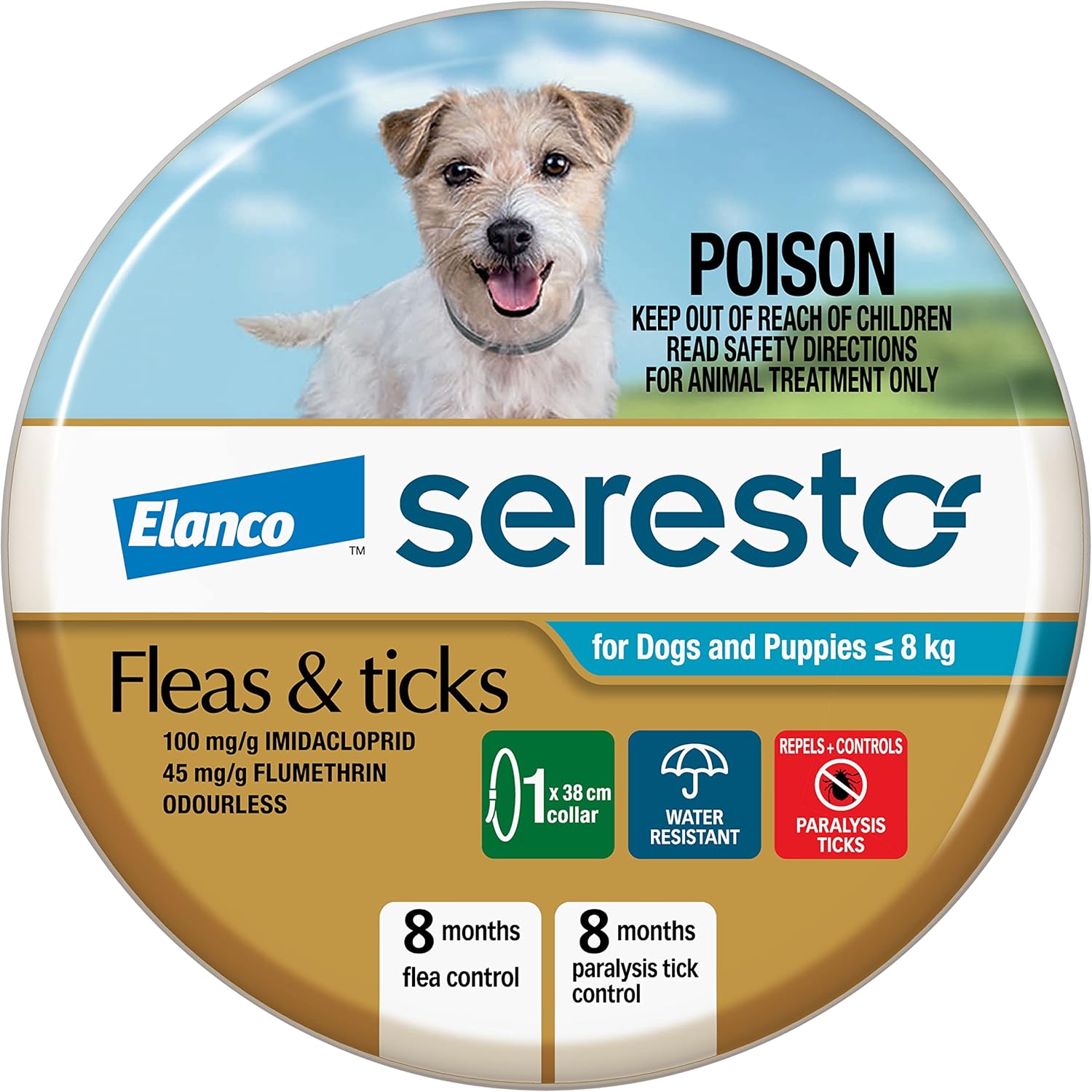
Seresto Flea and Tick Collar (8-month)
Continuous 8-month protection against fleas and ticks via collar. Ideal for dogs that won't take oral medications. Water-resistant and convenient — no monthly reminders needed.
| Product type | Frequency | Best for |
|---|---|---|
| Oral chew (Bravecto, NexGard) | Monthly | Dogs that are easy to tablet — most owners prefer this |
| Spot-on drops | Monthly | Dogs that won't take chews, or those with food allergies |
| Collar (Seresto) | Every 8 months | Set-and-forget owners; dogs that swim frequently |
Prevention doesn't eliminate the need for daily checks
Prevention products kill ticks quickly but not instantly. A tick attached for even a few hours before the product kills it can potentially inject small amounts of toxin. Daily checks during season remain non-negotiable even if your dog is on prevention.