
Dog Dental Care in Australia — The Complete Guide to Clean Teeth
Dental disease affects 80% of Australian dogs by age 3. Here's how to prevent it at home — no vet bill required.
Dental disease is the most common preventable condition in Australian dogs — it's not just bad breath
Daily brushing is gold standard; dental chews and water additives are supplements, not replacements
Start brushing young, use enzymatic toothpaste, and book annual vet cleanings under anaesthetic
Affiliate Disclosure: As an Amazon Associate I earn from qualifying purchases. Product links on this page go to Amazon AU. Prices shown are approximate — check Amazon for current pricing.
- 🦷#1 preventable condition in dogs
- 📅80% affected by age 3
- 💸$500–1,500 to treat
- 🏠Largely preventable at home
- 🇦🇺All Australian breeds at risk
Your dog's breath smells like a bin liner. Their gums are swollen. They flinch when you touch their mouth. These aren't quirks — they're the visible tip of a disease that, left untreated, reaches their heart and kidneys.
of Australian dogs have dental disease by age 3
more likely to develop heart disease with untreated gum infection
maximum cost of a single professional vet clean
Why Australian Dogs Have Such Bad Teeth
In the wild, chewing raw bones and whole prey naturally scours plaque off teeth. Pet dogs eat soft kibble, rarely chew hard objects, and never floss. Plaque accumulates, hardens into tartar within 72 hours, and triggers bacterial infection at the gum line. By age 3, most untreated dogs have visible tartar and early gum disease.
The real cost of doing nothing
A professional vet clean costs $500–1,500 AUD and requires general anaesthetic. Wait too long and you're looking at tooth extractions ($50–150 per tooth), bone loss, and systemic infections requiring hospitalisation.
The 3-Step At-Home Routine
Do all three for maximum protection
Daily Brushing — The Gold Standard
Enzymatic toothpaste removes plaque before it hardens into tartar. Brush outer tooth surfaces in small circles — that's where plaque builds up. Aim daily; 3–4× per week is the minimum to stay ahead of disease.
Dental Chews — Mechanical Backup
VOHC-certified chews (like Greenies or WHIMZEES) mechanically scrub plaque while your dog chews. Not a brushing substitute — but they reduce tartar by up to 60% when used daily alongside brushing.
Water Additives — Effortless Protection
Drop a capful into the water bowl daily. Enzymes continuously protect teeth while your dog drinks. Zero effort, zero taste difference. Best as a third layer after brushing and chews.
Step 1 — Best Brushing Kit
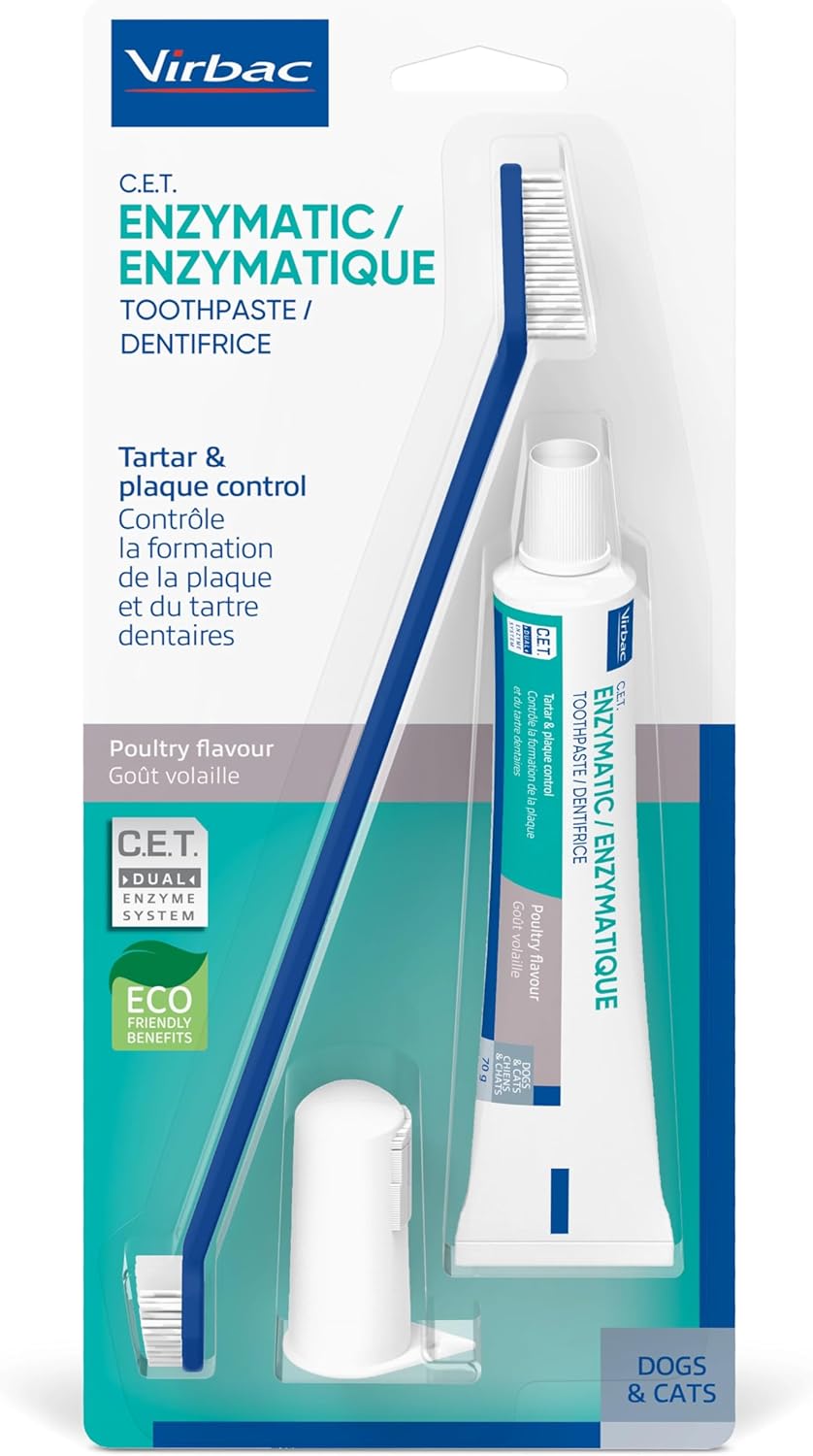
Virbac C.E.T. Enzymatic Toothpaste + Brush Kit
Gold-standard dual-enzyme system. Removes plaque without fluoride toxicity concerns. Includes an angled toothbrush designed for dog mouths.
Step 2 — Best Dental Chews

Greenies Original Dental Dog Treats
VOHC-certified chews that reduce plaque and tartar by up to 60%. Natural texture cleans teeth mechanically. Available for all size dogs.

WHIMZEES Dental Chews (Plant-Based)
Vegetable-based alternative for dogs who can't tolerate meat-based chews. Same VOHC certification, gentler on sensitive stomachs.
Step 3 — Best Water Additive
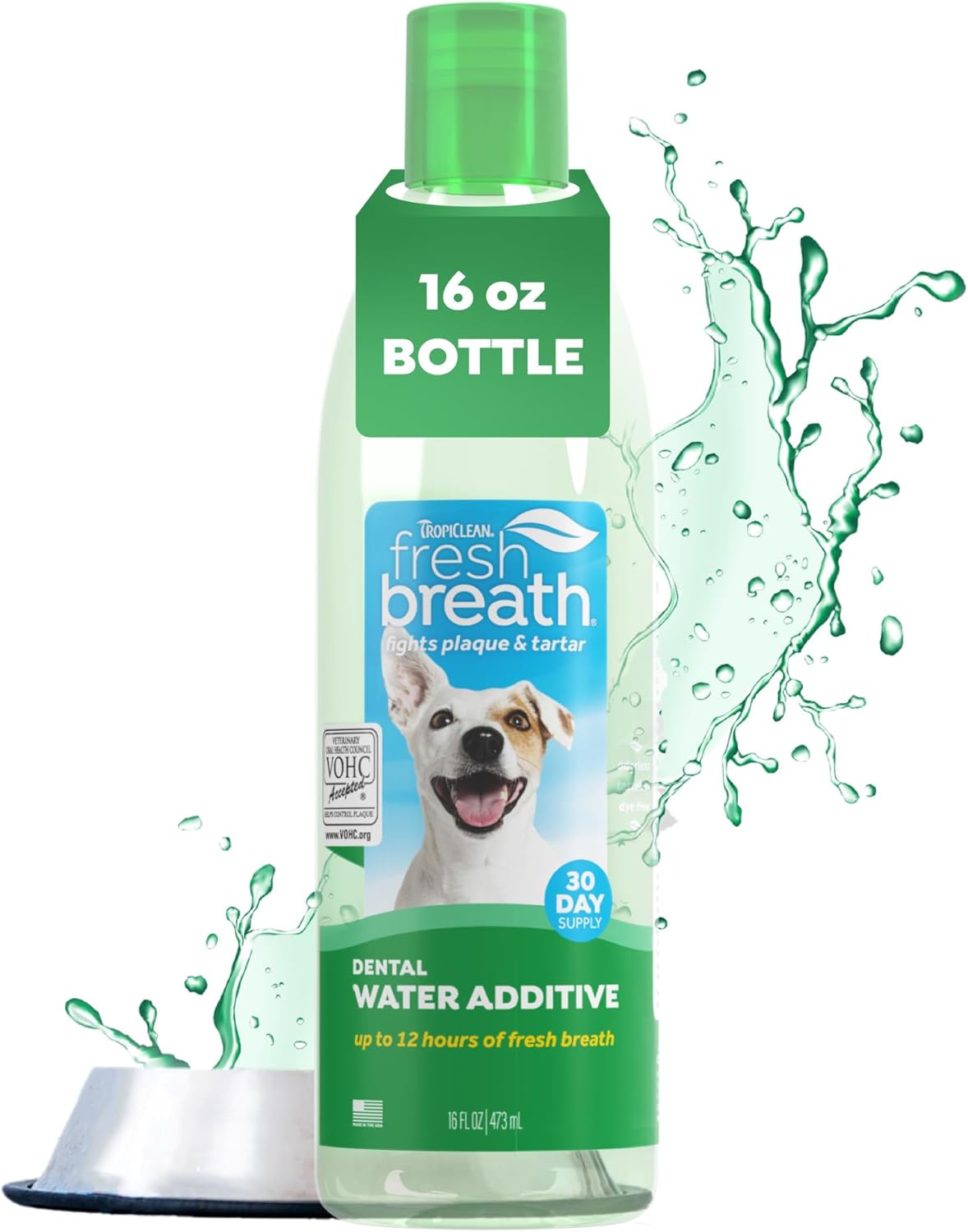
Tropiclean Fresh Breath Water Additive
Probiotic and enzyme formula. Freshens breath and fights plaque all day. Tasteless — most dogs don't notice it's in the water.
🦷 Daily Dental Routine Tracker
- Brush teeth with enzymatic toothpaste
- Give one dental chew after a meal
- Check water additive is in the bowl
- Gums look pink (not red or swollen)
- No strong odour beyond normal dog breath
- No flinching when touching mouth or jaw
Start at 8 weeks — not 8 months
Puppies are far easier to desensitise than adult dogs. Start by rubbing your finger along their gums, then introduce toothpaste taste, then the brush. It takes about 2 weeks to build acceptance. Waiting until adulthood makes training exponentially harder.
Professional Vet Cleanings — How Often?
| Brushing frequency | Recommended vet clean | Estimated cost |
|---|---|---|
| Daily brushing | Every 1–2 years | $500–800 AUD |
| 3–4× per week | Annually | $600–1,000 AUD |
| Chews only (no brushing) | Every 6–12 months | $700–1,200 AUD |
| No prevention at all | Every 6 months or less | $1,000–1,500+ AUD |
The vet removes tartar below the gum line — the subgingival buildup you can't see or reach at home. This is what causes bone loss and tooth root infections. Pre-anaesthetic blood work is recommended for dogs over 7.
Early Warning Signs to Watch For
What NOT to Do
Avoid these common mistakes
Human toothpaste (fluoride is toxic to dogs). Cooked or weight-bearing bones (crack teeth and splinter). Home ultrasonic scalers (damage gums without proper technique). Raw meat diets alone (don't remove calculus below the gum line). Skipping annual vet checks once disease starts — it accelerates fast.