
Best Puppy Crates in Australia 2025 — Vet & Trainer Approved
The right crate size and type can make toilet training 10x easier. Here's what Australian trainers actually recommend.
Wire crates are most popular in Australia for their durability and ventilation in warm weather
Size your crate so your pup can stand, turn, and lie down comfortably — not roomy enough to potty in one corner
Crate training works best when introduced positively; never use it as punishment
Affiliate Disclosure: As an Amazon Associate I earn from qualifying purchases. Product links on this page go to Amazon AU. Prices shown are approximate — check Amazon for current pricing.
- 🏠Dogs are den animals — a correctly sized crate feels safe, not confining
- 📐Sizing rule: stand up + turn around + lie down — but no more. Too big = toileting in one corner
- 🌡️Wire crates essential in AU — plastic traps heat in 35°C+ summers
- ⏱️Bladder rule: 1 hour per month of age + 1 (3-month pup = 4 hours max)
- 🚫Never use as punishment — must remain a safe, positive space
A properly sized crate leverages your puppy's natural instinct to keep their sleeping area clean — making house training predictable and fast. The key is sizing: too big and they'll toilet in one corner and sleep in the other. Too small and they'll be stressed. Get the size right, introduce it positively, and crate training becomes one of your most powerful tools.
Faster toilet training with correct crate use vs no crate
Max crate time for a 3-month puppy (1hr per month + 1)
Australian summer temps that make wire crates essential for ventilation
Wire vs Plastic vs Soft-Sided: Which Wins in Australia?
| Type | Best For | Australian Heat | Durability | Price |
|---|---|---|---|---|
| Wire (folding) | Most puppies — ventilation is excellent | ✅ Best — airflow all sides | High | $130–$280 |
| Heavy-duty wire/steel | Anxious dogs, escape artists, large breeds | ✅ Good — no walls | Highest | $200–$450 |
| Plastic (IATA) | Air travel, car transport | ❌ Poor — traps heat | Medium | $80–$200 |
| Soft-sided fabric | Camping, travel for trained dogs | ✅ Medium | Low — chewers will escape | $60–$140 |
Heat Danger — Never Leave in a Car
A crate in a car on a 35°C day can reach 50°C+ in minutes. Never crate your puppy in a vehicle without air-conditioning running. Wire crates need shade and airflow indoors too during Australian summers.
Crate Sizing by Breed Size
| Adult Dog Size | Adult Weight | Recommended Crate Size | MidWest Size |
|---|---|---|---|
| Small | Under 10kg (Cavoodle, Maltese, Pug) | 61–76cm | 24" or 30" |
| Medium | 10–25kg (Staffy, Beagle, Cocker Spaniel) | 76–91cm | 30" or 36" |
| Large | 25–40kg (Lab, Golden, Husky) | 91–107cm | 36" or 42" |
| Extra Large | 40kg+ (GSD, Malamute, Great Dane) | 107–122cm+ | 42" or 48" |
Buy One with a Divider Panel
Don't buy a "puppy size" crate you'll replace in 3 months. Buy the adult size with a divider panel. Start with a small section, then remove dividers as your puppy grows. Most quality wire crates include a divider.

MidWest Homes for Pets iCrate
The Australian trainer favourite. Foldable wire crate with a divider panel for growing puppies. Heavy-duty dual latches, two-piece floor pan for easy cleaning. Folds flat for transport. Available in all sizes.
Ruff & Barker Heavy Duty Dog Crate
Welded steel frame (not folded wire) designed for anxious and large breed puppies. Australian-owned brand. Powder-coated anti-rust finish, heavy-duty latches, will not be bent or pushed open.
PetSafe Two-Door Wire Dog Crate
Two door access for flexible room placement — front and side entry. Great for pups who panic with one exit. Chrome-plated rust resistance, easy fold, mid-price. Good for bedrooms and living rooms.
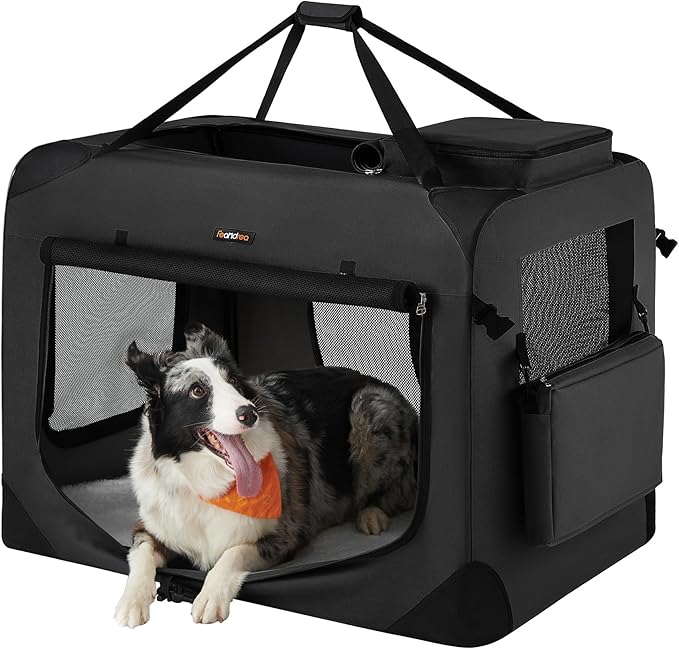
Petmate Soft Sided Travel Crate
Lightweight fabric and mesh for car trips and camping with already-trained dogs. Breathable and comfortable. Not suitable for puppies still in training or heavy chewers — they will escape.
Impact Dog Crate
Aircraft-grade aluminium crate for dogs that have broken out of standard wire crates. Australian customers can order online. Lifetime warranty. Worth the investment for strong chewers and persistent escape artists.
Introducing the Crate: Step-by-Step
Door open — explore freely
Place crate in a family living area (not isolated garage or laundry). Leave door open. Toss treats inside. Let them explore at their own pace.
Feed meals inside
Place food bowl just inside the door, then progressively further in. Creates a strong positive association with the space.
Close door for 5–10 minutes
While you're home and visible. If they're calm, open before they whine. Build duration slowly — never go further than they can handle.
Build to 30–60 minutes
Over 1–2 weeks. Stay home during all crating. Only progress when they settle calmly within 2 minutes of closing the door.
Night crating
Place crate by your bed initially so you hear toilet needs. Expect middle-of-night breaks until 12–16 weeks. Accelerates house training significantly.
Bladder Capacity by Age
A puppy can hold their bladder approximately 1 hour per month of age plus 1. 8 weeks (2 months) = 3 hours max. 3 months = 4 hours. 4 months = 5 hours. Always schedule a toilet break immediately after crate time — they will need it.