Buying guide
Best Dog Supplements in Australia 2025 — Joint, Skin, Gut & More
Most dogs don't need supplements — but some do. Here's what actually works, what's a waste of money, and what Australian vets recommend.
5 picks, 8 min read

Our top picks
- 1

Vet Recommended
Blackmores PAW OstoCare Plus
View on Amazon - 2
Anti-Inflammatory
Vetalogica Omega-3 Fish Oil
View on Amazon - 3

PAW DigestiCare Probiotic
View on Amazon - 4

Popular
VetriScience Skin & Coat Support
View on Amazon - 5
ActivePet Joint Guard Plus
View on Amazon
Compare at a glance
Glucosamine + chondroitin + MSM
- Best for
- Arthritis, aging joints, large breeds
- Time to results
- 4–6 weeks
- Evidence quality
- ⭐⭐⭐⭐ Strong
Omega-3 fish oil (EPA + DHA)
- Best for
- Skin, coat, joint inflammation, cognition
- Time to results
- 6–8 weeks
- Evidence quality
- ⭐⭐⭐⭐ Strong
Probiotics
- Best for
- Loose stools, digestive upset, post-antibiotic gut repair
- Time to results
- 2–3 weeks
- Evidence quality
- ⭐⭐⭐ Moderate
Skin & coat (biotin + zinc + vitamin E)
- Best for
- Dry skin, excessive shedding, dull coat
- Time to results
- 4–6 weeks
- Evidence quality
- ⭐⭐⭐ Moderate
Green-lipped mussel
- Best for
- Preventative joint care in active/large breeds
- Time to results
- 4–8 weeks
- Evidence quality
- ⭐⭐⭐ Moderate
| Supplement type | Best for | Time to results | Evidence quality |
|---|---|---|---|
| Glucosamine + chondroitin + MSM | Arthritis, aging joints, large breeds | 4–6 weeks | ⭐⭐⭐⭐ Strong |
| Omega-3 fish oil (EPA + DHA) | Skin, coat, joint inflammation, cognition | 6–8 weeks | ⭐⭐⭐⭐ Strong |
| Probiotics | Loose stools, digestive upset, post-antibiotic gut repair | 2–3 weeks | ⭐⭐⭐ Moderate |
| Skin & coat (biotin + zinc + vitamin E) | Dry skin, excessive shedding, dull coat | 4–6 weeks | ⭐⭐⭐ Moderate |
| Green-lipped mussel | Preventative joint care in active/large breeds | 4–8 weeks | ⭐⭐⭐ Moderate |
Affiliate Disclosure: As an Amazon Associate I earn from qualifying purchases. Product links on this page go to Amazon AU. Prices shown are approximate, check Amazon for current pricing.
The pet supplement market is full of expensive, unproven products. But some supplements genuinely help — if you're giving them to the right dog, for the right reason. This guide covers what actually works, which dogs benefit, and what Australian vets recommend.
Which Dogs Actually Need Supplements?
- 7+ years old
- Joints degrade with age — glucosamine and omega-3s are the most impactful
- Over 25 kg body weight
- Large breeds carry more joint stress — preventative supplementation delays arthritis onset
- Diagnosed arthritis
- Joint supplements reduce pain and slow cartilage breakdown — most vets recommend them alongside NSAIDs
- Skin or coat problems
- Omega-3s and biotin address the root cause of many itching, shedding, and dullness issues
- Digestive sensitivities
- Probiotics restore gut flora disrupted by antibiotics, diet changes, or stress
- Recovering from surgery or injury
- Protein, omega-3s, and vitamin C support tissue repair and reduce post-surgery inflammation
The 5 Supplement Types With Real Evidence
Joint & Cartilage Supplements
Glucosamine, chondroitin, and MSM are the gold standard for arthritic dogs. They slow cartilage breakdown and reduce joint inflammation. Australian vets routinely recommend these for senior large breeds — and they often reduce reliance on anti-inflammatory medications.
Vet Recommended
Blackmores PAW OstoCare Plus
Glucosamine, chondroitin, and MSM in veterinary-strength doses. Australia's most trusted joint supplement — recommended in every major vet clinic. For dogs over 7 or large breeds with mobility issues.
- Glucosamine + chondroitin + MSM
- Veterinary strength doses
- Reduces inflammation and improves mobility
- Made in Australia by Blackmores
Omega-3 Fish Oil
Omega-3 fatty acids (EPA and DHA from fish oil) reduce systemic inflammation, improve skin barrier function, support joint health, and maintain cognitive function in aging dogs. Dogs with allergies, dull coats, dry skin, or arthritis see the most dramatic improvement.
Anti-Inflammatory
Vetalogica Omega-3 Fish Oil
High-potency EPA and DHA fish oil from Australian-approved sources. Reduces allergic inflammation, supports skin barrier, and maintains cognitive function in seniors. Safe for long-term use.
- High EPA + DHA concentration
- Supports skin barrier and coat
- Cognitive support for seniors
- Easy-pump dispenser
Probiotics & Gut Health
Probiotics are most useful after a course of antibiotics, during dietary transitions, or for dogs with chronic loose stools and gas. Look for multi-strain formulas with Lactobacillus and Bifidobacterium species, at billions of CFUs per dose. Powder forms are easiest to administer.
PAW DigestiCare Probiotic
Multi-strain probiotic with prebiotic inulin, specifically formulated for dogs. Reduces diarrhoea, bloating, and gut instability. Effective within 2–3 weeks of consistent use.
- 7-strain probiotic blend
- Prebiotic inulin for gut flora growth
- Powder form mixes into food
- Australian formulation by PAW
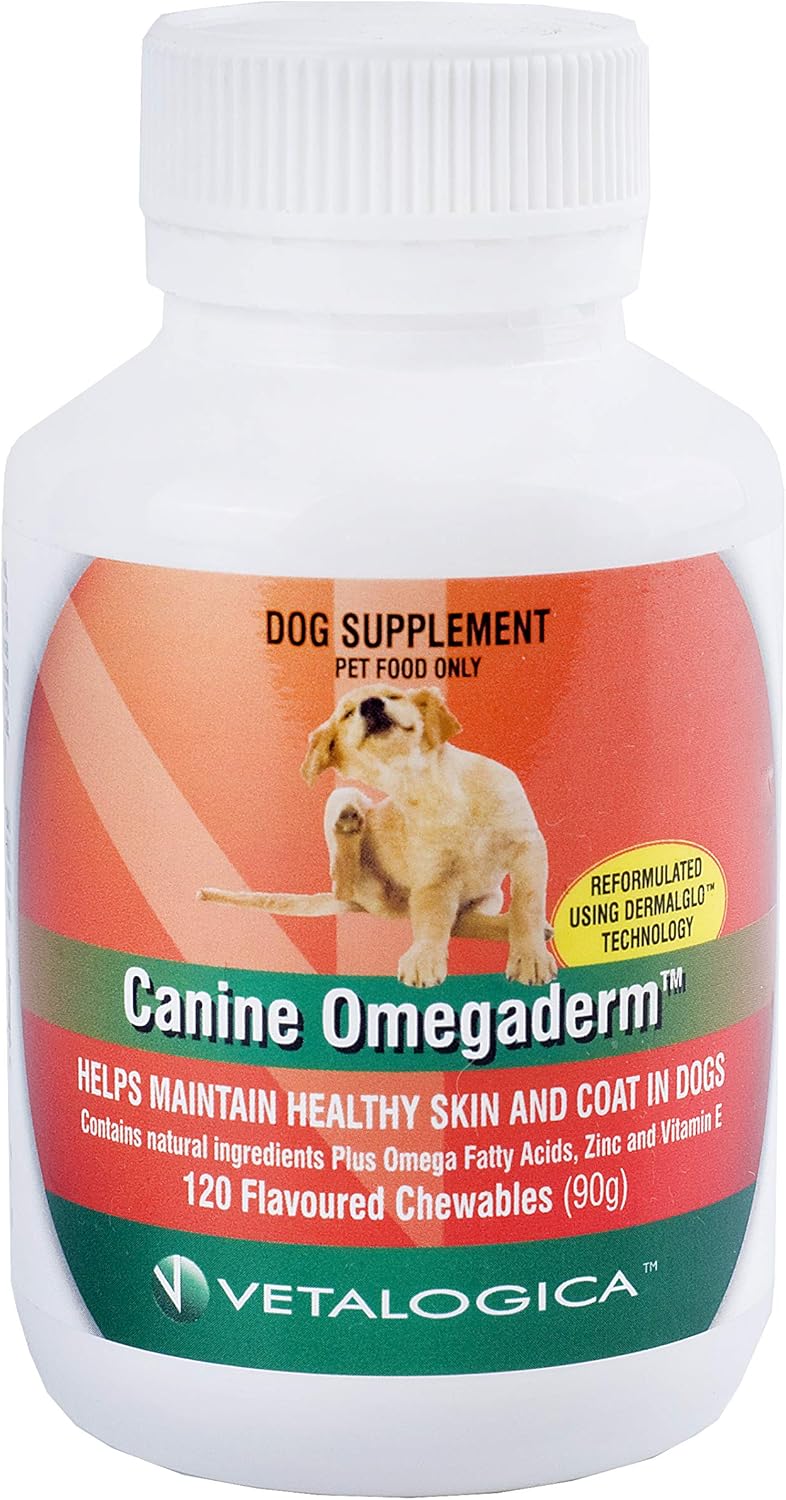
Skin & Coat Supplements
If your dog sheds heavily, has a dull coat, or suffers from allergic dermatitis, a targeted skin supplement combining omega-3s, biotin, zinc, and vitamin E can produce visible results in 4–6 weeks. These work best alongside allergen management, not instead of it.
Popular
VetriScience Skin & Coat Support
Omega-3s, biotin, zinc, and vitamin E in one chewable formula. Reduces itching, improves coat shine, and strengthens the skin barrier against allergens. 180 soft chews per pack.
- Omega-3 + biotin + zinc + vitamin E
- Reduces allergic skin inflammation
- Visible coat improvement in 4–6 weeks
- 180 soft chews
Preventative Joint Care (Active & Large Breeds)
For younger large breeds or high-impact working and sporting dogs, preventative mobility supplements can delay arthritis onset by years. Green-lipped mussel (native to New Zealand) provides natural anti-inflammatory compounds and is most effective when started before age 5.
ActivePet Joint Guard Plus
Green-lipped mussel, ginger, and curcumin for preventative joint support in active dogs. Commonly used by Australian sporting dog breeders to maintain long-term joint health.
- Green-lipped mussel (natural anti-inflammatory)
- Curcumin and ginger for inflammation
- For active dogs under 5
- Powder form — mixes into food
How to Read a Supplement Label
- ✅ Individual ingredients with dosages
- You need to know how much glucosamine is per dose — vague "joint blend" with no breakdown is a red flag
- ✅ ARN or TGA notification
- Australian Registered Name or TGA notification confirms the product meets AU regulatory standards
- ✅ Third-party testing
- NATA-accredited testing or similar verifies potency claims are accurate
- ❌ "Proprietary blend" with no breakdown
- Hides inadequate doses of active ingredients behind an impressive-sounding name
- ❌ Claims to "cure" disease
- Illegal in Australia for supplements to claim to cure conditions — if it says this, avoid it
- ❌ Corn, soy, or sugar as main ingredients
- Cheap fillers that add bulk but no therapeutic benefit
Common questions
Do I need a vet's approval before giving supplements?
Not legally required in Australia, but recommended. Some supplements interact with medications — glucosamine can affect blood clotting, omega-3s can interact with anticoagulants. Always check with your vet if your dog is on any medication, has kidney disease, or is pregnant.
How long until I see results?
Joint supplements: 4–6 weeks. Omega-3s: 6–8 weeks for visible coat improvement. Probiotics: 2–3 weeks for digestive stability. Consistency matters — skipping doses resets the timeline. Don't judge a supplement after 2 weeks.
Are Australian brands better than overseas brands?
Australian brands like Blackmores PAW and Vetalogica are regulated and tested to TGA/APVMA standards. Overseas brands vary widely. If buying non-Australian brands, look for NSF, USP, or Informed Sport certification as quality markers.
Can too many supplements hurt my dog?
Yes. Fat-soluble vitamins (A, D, E, K) accumulate in the liver over time. Never double-dose, combine multiple multivitamins, or add supplements to an already fortified prescription diet. Stick to targeted supplements for specific issues, not a shotgun approach.
Can puppies take supplements?
Healthy puppies on quality food don't need most supplements. Omega-3s for brain development and probiotics for sensitive guts can help specific cases. Avoid joint supplements and high-dose vitamins unless your vet recommends them — excess calcium in puppies causes skeletal problems.
What's the difference between joint supplements and pain medication?
Pain medications (NSAIDs like Metacam) block the pain signal — fast, effective, but don't address the underlying joint damage and have side effects with long-term use. Joint supplements slow cartilage breakdown over time — slower to work but no organ stress. Many arthritic dogs do best on both.