
Bushfire Season and Your Dog: Build Your Emergency Plan Now
The decision that saves dogs is made weeks before the fire, not on the day. Here is how to plan, pack and leave early with your dog in Australia
Fire authorities say leave early, before there is a fire in the area. Never stay home to protect a pet, and never go back for one once fire threatens.
A pet emergency kit, an up-to-date microchip and a pre-arranged safe place to take your dog are the three things to sort before fire season starts.
If you truly cannot evacuate, never tether your dog. Keep them indoors away from hazards with water in stable containers, and put a note on the door.
Affiliate Disclosure: As an Amazon Associate I earn from qualifying purchases. Product links on this page go to Amazon AU. Prices shown are approximate — check Amazon for current pricing.
- 🚗Leave early, before fire is in the area
- 🎒Kit packed and by the door before fire season
- 📇Microchip details checked and current
- 🏠Safe place pre-arranged with someone you trust
- 🚫Never tether your dog or leave them in a car
- 📱Use your state fire authority for warnings
Nobody plans to be caught out. But every fire season, animal welfare groups and fire authorities see the same pattern: people who decide what to do with their pets while the smoke is already on the horizon, and who run out of time. Preparing your dog for an emergency is not a dramatic act. It is a Sunday afternoon, a plastic tub, and a few phone calls, and it is the single most useful thing you can do before summer.
This article is general guidance drawn from RSPCA and Country Fire Authority advice. It does not replace official warnings. Your state fire authority and emergency app are the source of truth on the day, and if you live in a bushfire-prone area, your household bushfire survival plan should include your animals from the start.
The only safe time to leave with a pet
Things to sort first: kit, ID, safe place
Food, water and medication to pack
Times to tether a dog you cannot evacuate
Rule One: Leave Early
The Country Fire Authority is direct about this. On high fire danger days, leave early, before there is a fire in the area. On Extreme or Catastrophic rated days its advice is to leave by 10am or the night before. Leaving late, once a fire has started, can mean injury or death, for you and for the animal you were trying to save.
Do not stay to protect your dog, and do not go back for them
Staying home to be with a pet during a fire is one of the most dangerous decisions a household can make. So is returning to collect an animal once fire threatens. Fire authorities also warn that last-resort community shelters are not designed to house pets and may not let them in, so your plan needs a destination that will.
Step One: Choose Where Your Dog Will Go
Well before fire season, work out where your dog can go during periods of high fire danger. That might be a friend or relative outside the risk area, a boarding kennel, or a vet clinic that offers emergency boarding. Then actually call them. A promise made in casual conversation is not a plan, so confirm that they are happy to take your dog at short notice and agree a trigger, such as a Severe fire danger rating, that means you send the dog early.
Step Two: Sort Identification
If your dog does get separated from you, identification is what gets them home. Check that your dog is microchipped and wears a collar with an up-to-date tag at all times. Then log in to the microchip registry and confirm the details are current. Chips registered to a previous owner or a landline that no longer exists are a common reason lost dogs cannot be reunited with their owners.
Keep copies of your contact details, recent photos of your dog, their microchip number and their vaccination records together in a waterproof, fire-resistant container. Recent photos help prove the dog is yours if you are separated.
Step Three: Pack the Pet Emergency Kit
Keep the kit somewhere you can grab it in seconds, ideally in a waterproof container by the door or already in the car. The RSPCA and CFA checklists overlap heavily, and between them the essentials are these.
| Item | Why it matters |
|---|---|
| Food and water, at least a week's supply | Emergency accommodation rarely stocks your dog's food |
| Bowls and a tin opener | Collapsible bowls pack small |
| Spare collar and lead, plus a harness | Your usual set may be lost or left behind |
| Carrier or crate | Safe transport, and somewhere to settle a stressed dog |
| Medications for at least a week, with a written list | Dosage and timing written down helps a stranger care for them |
| Vaccination and medical records, vet contact details | Boarding and shelters ask for proof |
| Pet first aid kit | Burns, paw injuries and cuts on the road |
| Bedding or a familiar-smelling blanket | Reduces anxiety in a strange place |
| Waterproof torch, waste bags, treats and a toy | Comfort and practicalities |
| Recent photos of your dog, in a waterproof cover | Identification if you are separated |
Gear Worth Having in the Kit

Andyer Fireproof Document Bag (Two Pockets)
A fire and water resistant zip bag for the papers that prove your dog is yours: vaccination certificates, microchip registration and vet records. It has a reflective strip so you can find it fast in the dark, and it folds flat. Keep it with your own important documents.

Reliance Medical Pet First Aid Kit
A compact kit for paw injuries, cuts and minor burns on the way to the vet. It includes saline pods, a dressing bandage, gauze swabs, cleansing wipes, a foil blanket, scissors and gloves in a rip-stop bag. It does not replace a vet, but it is what you want in the car when you are two hours from one.
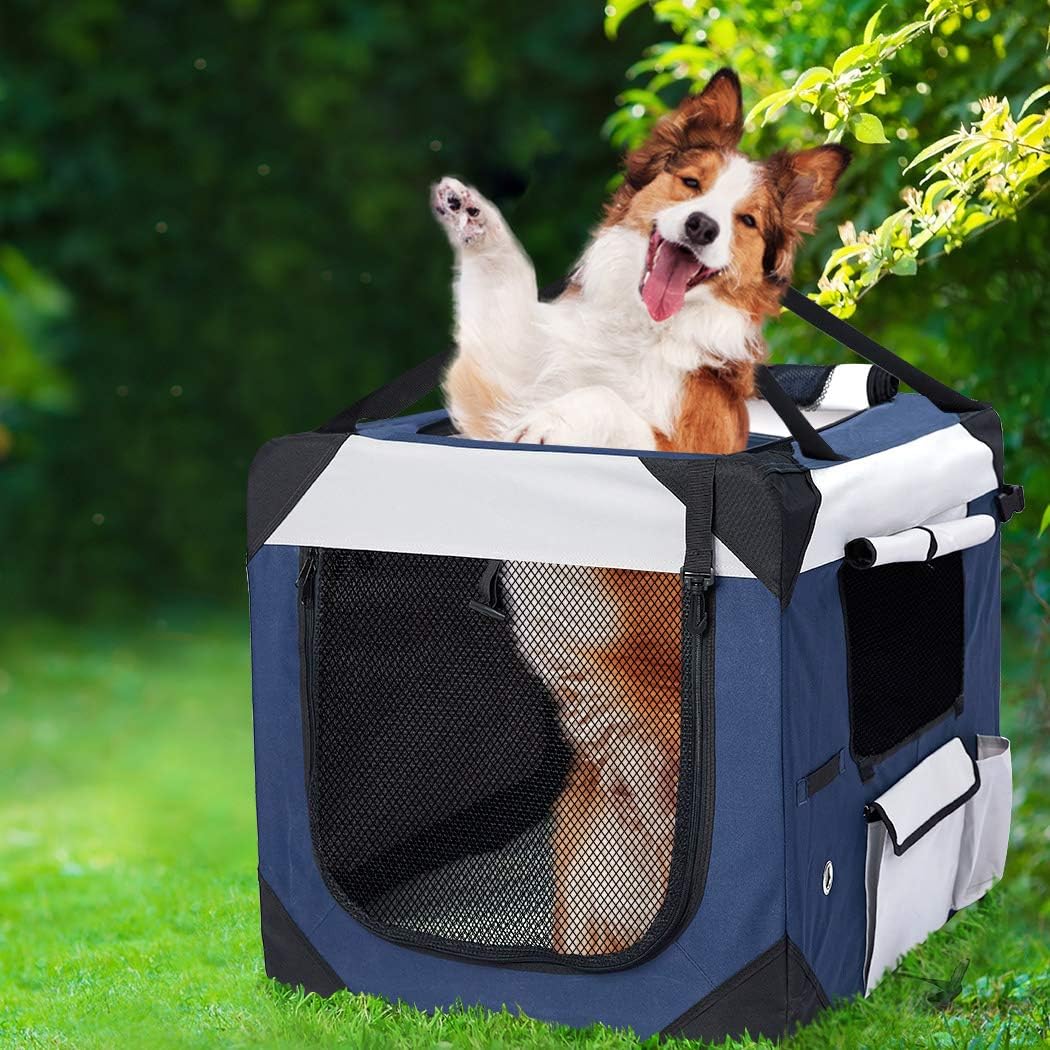
PaWz Foldable Soft-Sided Pet Carrier (XXL)
A collapsible steel-frame crate in 600D Oxford fabric with ventilation mesh. It folds down for storage and gives an anxious dog somewhere familiar to settle in a strange place. It is soft-sided and built for short trips, so it is a comfort and containment tool rather than a crash-tested restraint. Measure your dog against the listed size before you buy.

Kurgo Collaps-A-Bowl
Food-grade silicone, BPA free, and it collapses to under an inch, so it lives in the kit without taking space. It holds up to 24 ounces and comes with a carabiner to clip onto a bag or crate.

Petzl TIKKINA Headlamp
The RSPCA lists a waterproof torch in the kit, and a headlamp keeps your hands free to hold a lead and a carrier. It is 300 lumens with three lighting levels and weighs 92 g. It takes three AAA batteries, so keep spares in the tub.

Tractive GPS Dog Tracker
If a frightened dog bolts in the chaos of an evacuation, a tracker shows you where they went. It needs a paid Tractive subscription for the built-in SIM and data, and it relies on mobile coverage, which can be patchy or down in an active fire area. Treat it as a backup to a microchip and tag, never a replacement.
Practise the Trip
The RSPCA suggests regular short trips so your dog is comfortable being in the car and in a carrier. A dog who has never travelled in a crate will not calmly get into one while the sky is orange and you are stressed. Ten minutes of practice in spring, with treats and no destination, makes the real thing far less frightening.
Your Pre-Season Plan, in Order
Choose the safe place and confirm it
Call the friend, family member, kennel or vet clinic. Agree the trigger for sending your dog early and check they will actually take them.
Check microchip and tag details
Log in to the registry, confirm your mobile and address, and make sure the tag on the collar matches.
Pack the kit into one waterproof tub
Food, water, bowls, medication and list, records, first aid, spare lead, torch, bedding. Label it and store it by the door.
Practise loading and travelling
Short car trips, into the crate, treats at the end. Repeat until your dog treats it as normal.
Set up official warnings
Install your state emergency app and know your local fire danger rating before summer starts.
Refresh the kit each season
Swap food and medication before they expire and update photos as your dog changes.
Bushfire Season Pet Checklist
- Agree a safe place for my dog and confirm it with them
- Confirm my dog's microchip details are current
- Check the tag on my dog's collar is legible
- Pack one week of food, water and medication
- Put vaccination records and photos in a waterproof, fire-resistant bag
- Pack a spare collar, lead and harness
- Pack a first aid kit and a torch
- Practise loading my dog into the car and carrier
- Install my state emergency app
- Decide the fire danger rating at which my dog goes early
If You Cannot Evacuate
Sometimes leaving is not possible. If it comes to that, the RSPCA's advice is firm: never tether your dog, because a tethered animal cannot move to safety. Keep them indoors, away from hazards, in a room with the least exposure to windows. Leave at least a week's supply of food and water in stable, non-tippable containers in several accessible spots, and attach a note to the front door or letterbox with your contact details, the number of pets, their species, names and photos.
Never leave your dog in a car, a shed or on a chain
A parked vehicle becomes deadly within minutes on a hot day and offers no protection from radiant heat. Sheds and outdoor runs are just as exposed. If your dog cannot travel with you and cannot go to a safe place, an interior room is a last resort, not a plan.
Smoke, Paws and the Days After
Smoke is a health risk even a long way from the fire front. Keep dogs indoors with windows and doors closed on smoky days, offer plenty of fresh water, and skip strenuous exercise. Flat-faced breeds, seniors and dogs with heart or lung conditions are at higher risk.
See a vet urgently for these signs after smoke or fire exposure
Coughing that will not settle, laboured or noisy breathing, red or streaming eyes, singed hair, blistered or raw paw pads, limping on hot ground, or unusual lethargy. Smoke inhalation and burns can look mild at first and worsen over hours, so do not wait to see if it passes.
After a fire, ground can stay hot and littered with debris for days, and burnt areas can hide sharp objects and hazards. Keep your dog on a lead, check paws after every walk and watch for anything unusual in behaviour. Familiar routines, quiet space and their own bedding help a displaced dog settle.
None of this needs to be perfect. A kit that is 80 percent complete and already by the door beats a perfect one you never finish. Do it this month, before the season is in full swing.
Frequently asked questions
Keep Reading

Dog Microchipping in Australia: Everything You Need to Know
Mandatory in every Australian state and territory — costs, process, registration, and what to do when a microchip fails.

Best Dog First Aid Kits Australia 2026: Be Ready for Any Emergency
Paralysis ticks, snake bites, heatstroke, cuts, and burns. Australian-specific first aid kit guide for dog owners.

Best GPS Dog Trackers in Australia 2025 — Real-Time Location for Your Dog
Australian dogs face unique escape risks — from bush to beach. Here are the GPS trackers that actually work on Australian networks.